
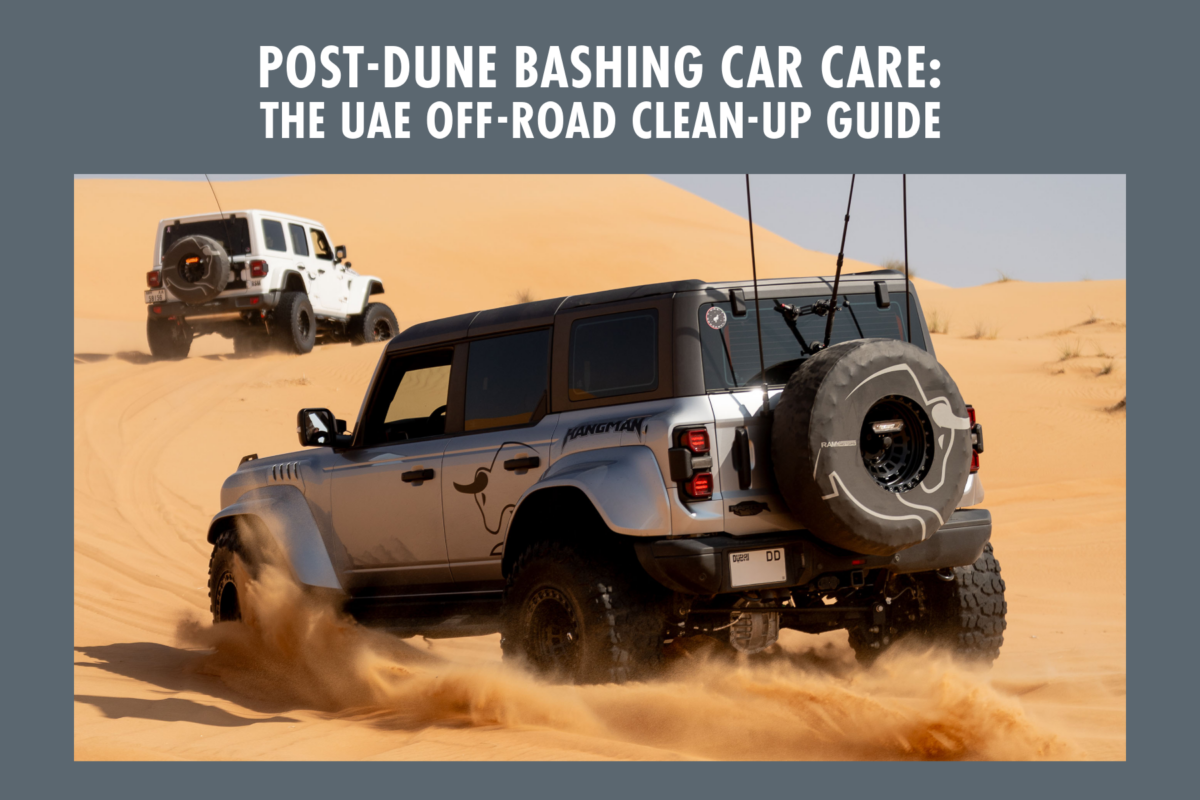

Since the 1950s and 1960s, 4×4 vehicles like the Land Rover Series I and Toyota Land Cruiser replaced camels as the main means of connecting remote villages. Over time, desert driving in the UAE evolved from a necessity into a beloved recreational and cultural activity especially around the Big Red, Al Faya, and Liwa regions. However, every UAE driver knows how brutal such trips are on their vehicles.
Sand can end up in the wheel arches, door sills, and the gap around the fuel cap trapping far more dirt after dune driving than city streets ever would. Left there, it rubs against metal and rubber seals causing them to wear out. This is why post-dune bashing car care is important to protect vehicles from fine desert sand ingestion.
What Sand Actually Does to Vehicles
Without effective means to protect cars after a desert safari adventure, several issues arise that often lead to long-term damage and costly repairs. It is not just the exterior surface; the damage that occurs underneath is what car drivers should be concerned about.
Accelerated Corrosion on Exposed Metal Underneath
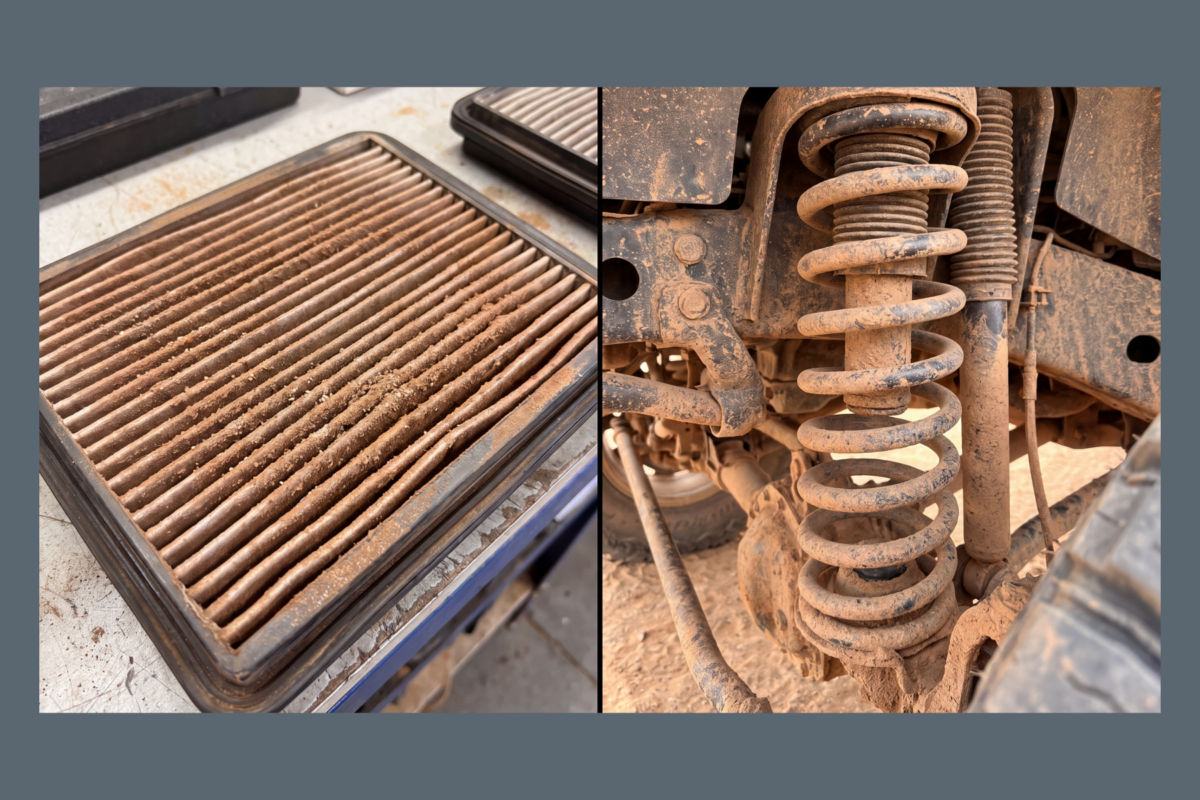
Sand packed into the undercarriage and suspension components is the part most people miss entirely, since it’s out of sight. It’s also where it can do the most long-term damage if a 4×4 undercarriage wash Dubai is not executed efficiently. That’s because the abrasive nature of sand can wear down essential parts like axles, suspension systems, and brake lines, reducing their efficiency and lifespan.
Clogged Air Filters
The purpose of an air filter is to keep harmful things out of your engine. However, when you drive around sand frequently, your filters clog more quickly. When this happens, it reduces airflow and causes your engine to overheat.
Grit in Door Seals and Carpets
Most times, desert driving car damage doesn’t just occur outside the vehicle; it starts from within. When sand tracks inside a car, it can damage carpets and floor mats. They are notoriously hard to remove, especially when embedded deep into the fibers or trapped in the rubber folds of door seals.
Abrasion on Paint and Glass,
Desert sand is highly abrasive, and when it comes into contact with your car’s exterior, it can chip or scratch the paint and clear coat. These small imperfections expose the exterior surface, leaving it vulnerable to moisture and accelerating corrosion. They act like sandpaper, and without off-road car cleaning UAE, they dull the finish and clear coat of your car.
What Should I Do to My Car After Dune Bashing?
After dune bashing, start by inspecting how much sand has affected the undercarriage, interior, and exterior areas. Proceed to rinse the undercarriage area under low pressure and avoid water entering sensitive areas. Never dry-wipe the exterior surface; rinse it thoroughly before washing with shampoo. Vacuum the interior, and use a soft brush to clean the AC vents.
| Area | Risk from Sand/Heat | What to Do First |
|---|---|---|
|
Undercarriage |
Corrosion, grit build-up
|
Low-pressure rinse as soon as possible |
|
Exterior & paint |
Abrasion, scratches, stone chips
|
Inspect, then wash before sand sets in
|
|
Interior & carpets
|
Sand ground into fabric/trim |
Vacuum thoroughly, wipe down vents |
|
Air filter & intake |
Reduced airflow, engine strain
|
Visual check; have it inspected if dusty
|
The Undercarriage Rinse: Top Priority Safeguard
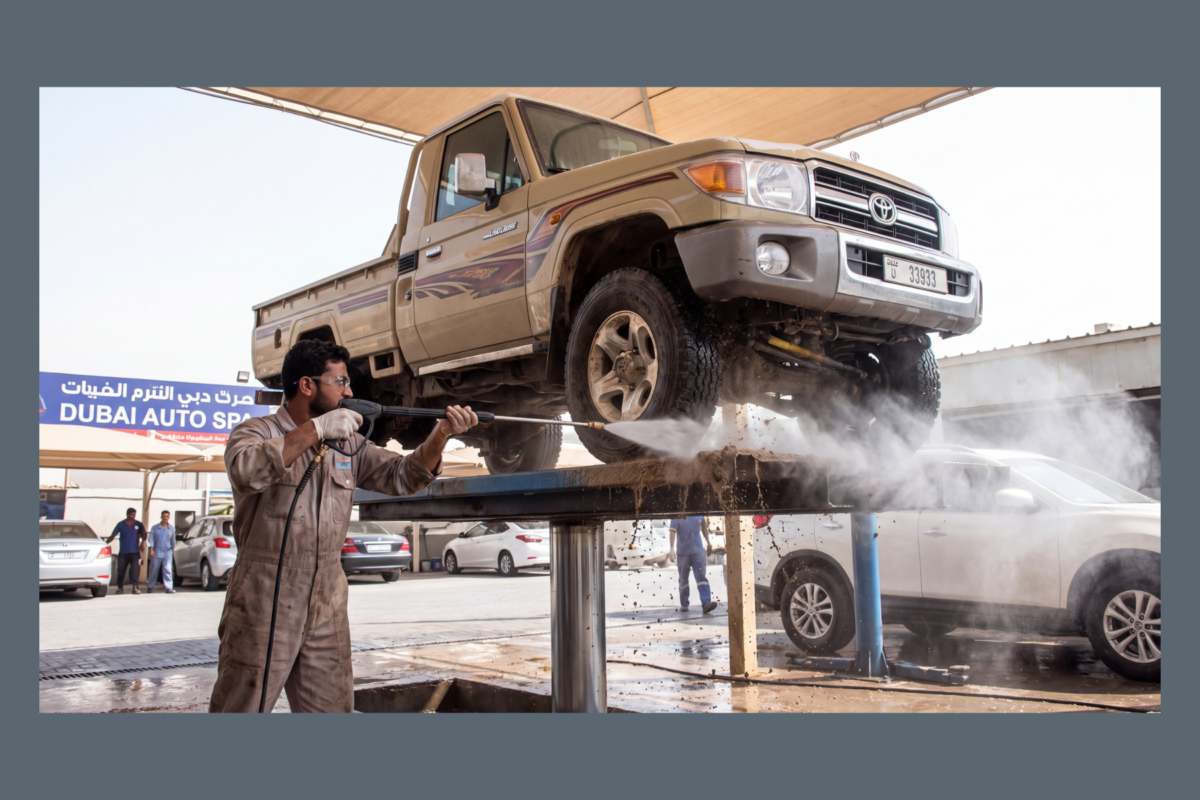
Housing critical components such as the suspension, exhaust, transmission, and brake lines, the undercarriage is susceptible to a host of damaging factors that can compromise vehicle integrity and safety. The primary concern with the undercarriage, as opposed to your vehicle’s aerodynamic and smooth top, is its numerous small nooks and crannies that trap dirt.
This isn’t inherently problematic, but the situation worsens with prolonged exposure to sand, which can lead to corrosion of some vital parts. To clean sand from car UAE in the undercarriage areas, follow these steps.
- Remove Loose Dirt and Debris: Begin by rinsing the undercarriage with clean water to remove loose sand and debris. At this phase, it is important to control the water pressure to prevent water from entering sensitive areas.
- Apply Car Wash Soap or Degreaser: Spray automotive-safe car wash soap across the underbody. Areas with grease, oil, or heavy buildup often require a dedicated degreaser. Allow the cleaning solution to sit for several minutes so it can loosen stubborn contaminants without drying onto the surface.
- Use an Undercarriage Washer: This equipment allows you to distribute water evenly beneath the vehicle and reaches areas that are difficult to access manually.
- Scrub Areas With Heavy Sand Buildup: Some sections, especially around suspension parts may have compacted mud. Use a soft long-handled brush to gently loosen stubborn deposits without scratching protective coatings or damaging rubber components.
- Pay Extra Attention to Wheel Wells: Wheel wells collect significant amounts of sand after desert driving. Thoroughly clean these areas using brushes and rinse them completely. Keeping wheel wells clean also helps reduce corrosion around suspension components and inner body panels.
- Rinse the Entire Undercarriage Thoroughly: Once all dirt has been loosened, rinse every section carefully until the water runs clear. Make sure no soap or degreaser remains trapped underneath, as leftover cleaning chemicals may leave residue or attract more sand over time.
- Allow to Dry and Apply Rust Protection: After rinsing, let the vehicle air dry naturally or use compressed air to remove excess moisture from tight spaces. Then, apply a rust inhibitor or underbody protectant to give the area an additional layer of defense against corrosion.
Expert Advice: Watch out for the wheel speed sensors, ABS wiring, oxygen sensors, and connector plugs during a 4×4 undercarriage wash Dubai. This is because if water breaks their seals the fault will only appear days later.
Exterior Check and Wash: Preserving Paint and Detecting Damage
Exterior car care after dune bashing starts with inspecting the surface for scratches and stone chips. The wind and traffic from the desert stir up those tiny particles that mix with moisture and coastal salt, increasing the risk of paint erosion.
Then, there is the haboob dust, which is a windblown mix of silica, clay, and mineral particles; picked up from miles of open desert. It is fine enough to hang in the air for hours and hard enough to scratch an automotive clear coat. Silica, the dominant ingredient, is what sandpaper is made from. When it lands on your car, it doesn’t just sit on the surface: it packs into panel gaps, mirror housings, door handles, cowl vents, and every crevice the wind can reach.
After inspecting your car, here is a safe way to wash off sand and the haboob dust:
1. Never Dry-Wipe: No dusters, no dry microfiber, no brushing it off, no windshield wipers on a dusty windscreen. This is the single rule that prevents the most damage. Every safe removal method starts with water, because water is what lifts and lubricates the grit so it can leave the surface without being dragged across it.
2. Rinse Exterior Thoroughly: A good approach is to work from the roof down, and take your time on the hiding places: door jambs, panel gaps, around badges and trim, mirror bases, the cowl at the base of the windshield, and the lower rockers where the heaviest dust settles. A proper rinse removes the majority of the abrasive load, which means everything that follows is dramatically safer.
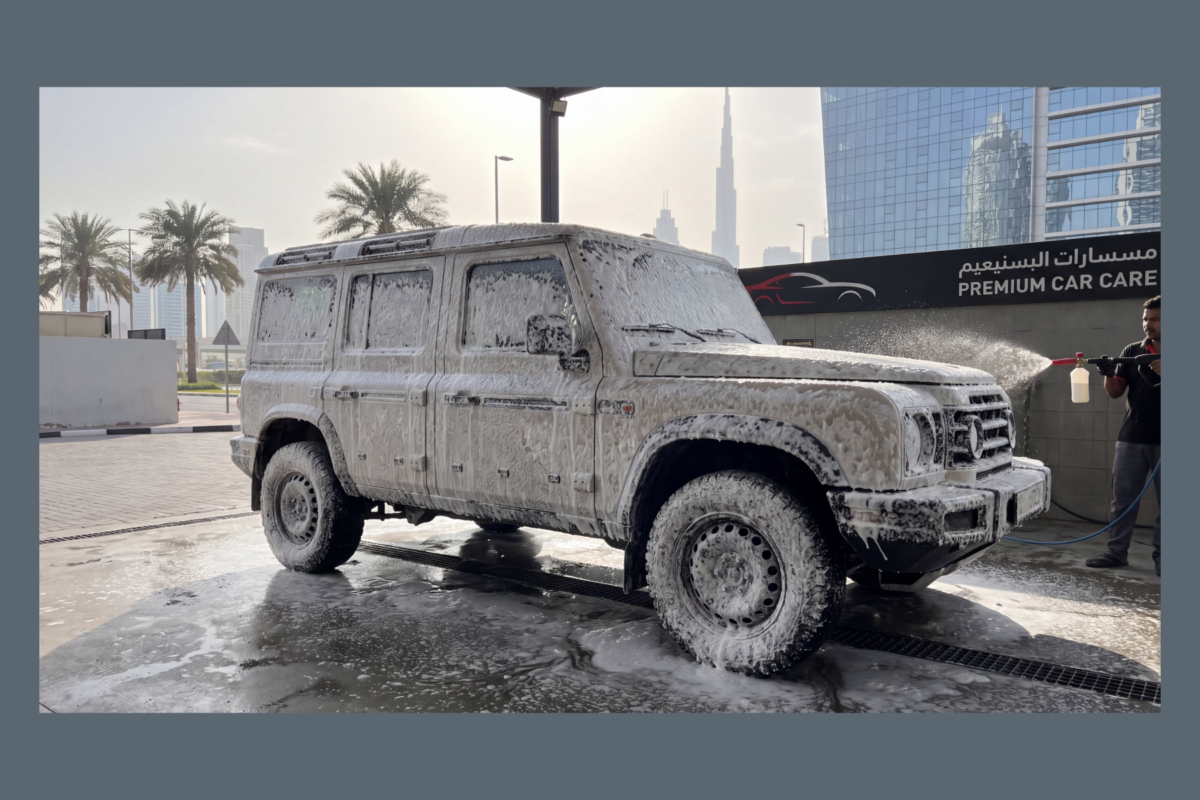
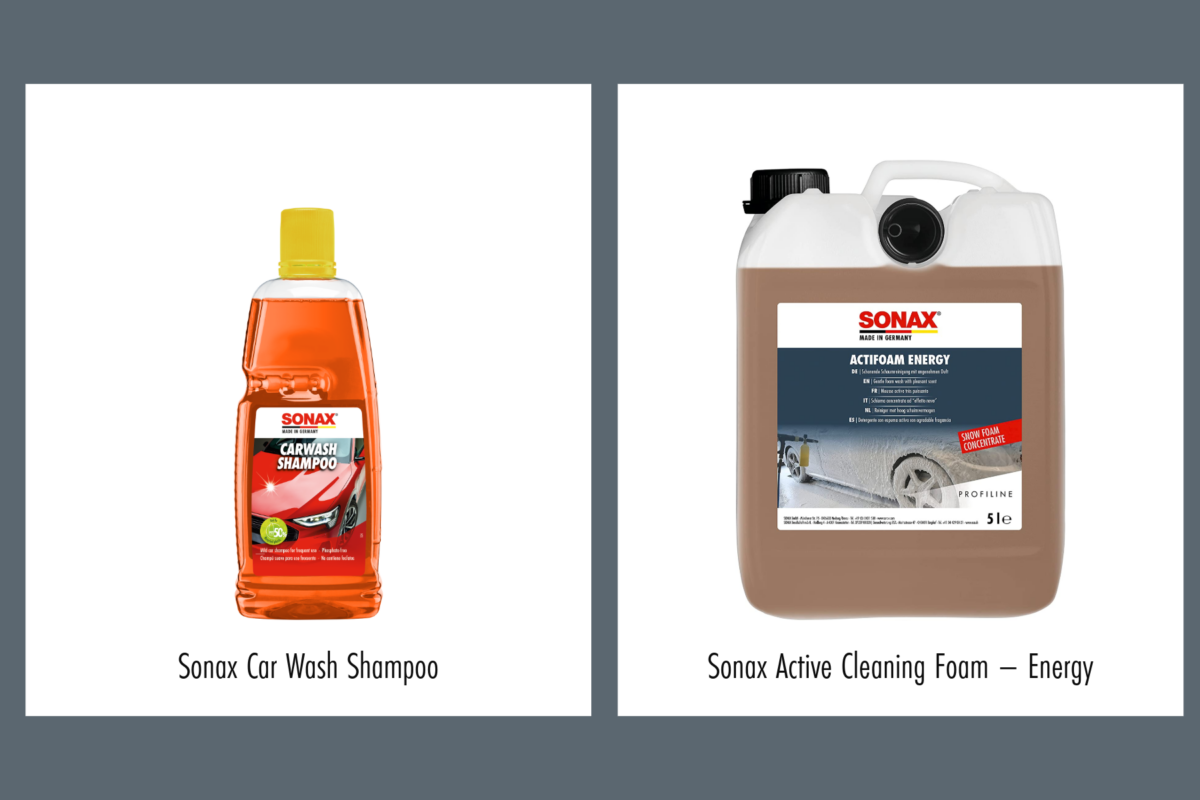
3. Pre-Soak with Foam: For this phase, we recommend the SONAX Active Cleaning Foam – Energy, which dwells on the surfaces, loosening the remaining film and wrapping the particles in lubricant so they slide rather than scrape. Let it dwell several minutes, then rinse again before the contact wash.
4.Contact Wash with the Two Bucket Method: Only at this phase does anything touch the paint. Use a dedicated car shampoo mixed rich, a clean microfiber wash mitt, and the two-bucket method: one bucket of suds, one of plain rinse water, with grit guards in both.
5.Rinse and Dry Quickly: Do the final rinse with the panels as cool as you can manage (shade, morning, or evening), then dry immediately with a clean microfiber drying towel. Then, a blower can serve to help get water out of mirrors and trim gaps without touching the paint at all.
Expert Advice: If you notice any embedded silica particles after washing, before drying with a microfiber towel, decontaminate with a clay bar to keep paint smooth.
Interior Deep Clean: Removing Fine Sand from Every Surface
Interior off-road car cleaning UAE process is a challenge because it requires extreme care. The areas mostly affected include carpets, mats, air vents, and door pockets. Let’s treat them one by one.
Carpets
Car carpets are the most difficult surface to fully clean because sand embeds below the surface pile and resists standard vacuuming
- Dry Extraction Sequence: Sprinkle a small amount of dry baking soda or dedicated carpet cleaning powder across the carpet surface. Allow it to sit for 5 to 10 minutes. The powder absorbs moisture that causes fine sand to clump and cling to fibres, making particles easier to extract. Vacuum thoroughly using a brush roller attachment.
- Wet Extraction Method: This involves steam cleaning or using carpet shampoo machines. They are effective for deep cleaning but require adequate drying time. In UAE summer conditions, poorly dried carpets can develop mould or mildew smell within 24 to 48 hours. If using a wet method, ensure the vehicle is parked in a well-ventilated area with doors open or windows partially down during drying.
Expert Advice: We strongly recommend two or three vacuuming passes with brush agitation between each pass typically to produce better results.
Mats
Floor mats receive the highest sand concentration of any interior surface because footwear deposits sand directly onto them at every entry point.
- Rubber Mats: Take the mat outside, shake it firmly, then rinse with a hose or bucket of water. Scrub with a stiff brush if sand is embedded in the ridges. Allow the mat to dry completely in a shaded area before returning it to the vehicle.
- Fabric or Carpet Mats: Shaking alone does not remove fine sand embedded deep in the pile. After shaking, vacuum both sides of the mat using a brush attachment. For heavier buildup, beat the mat against a hard surface first to loosen compacted particles before vacuuming.
Expert Advice: For desert driving conditions, rubber mats are generally considered more practical because they rinse clean and dry faster than fabric alternatives. Rubber mats with raised edge channels also contain sand rather than allowing it to spread onto the carpet underneath.
Air Vents
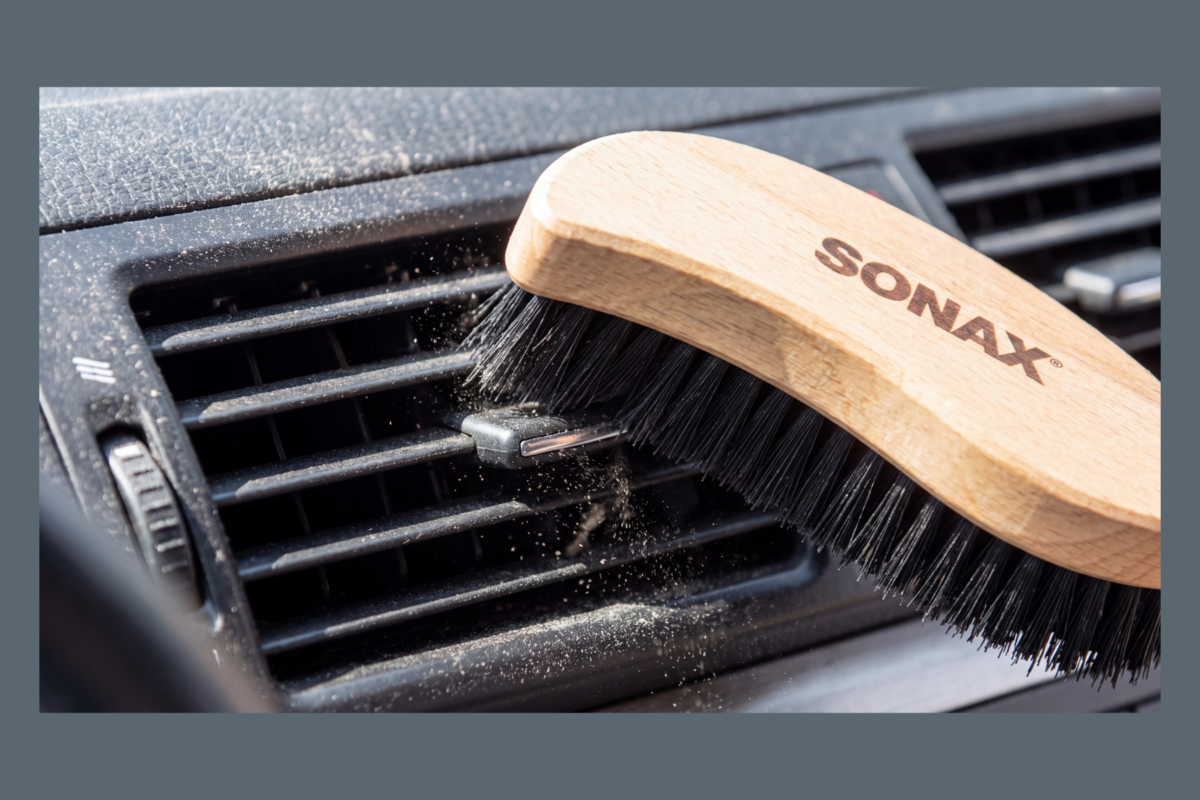
Sandstorm dust settles heavily on horizontal interior surfaces and enters through vent systems during an off-road drive. If AC vents are visibly coated with dust, clean the cabin air filter before running the air conditioning again, as a clogged or loaded filter will distribute particles through the interior when the system runs.
Use a detailing brush to dislodge dust from between louvre fins. Work the brush across the full width of each vent to cover the visible fin area. Vacuum immediately after brushing to capture loosened particles before they settle on other surfaces. Compressed air clears dust from deeper within vent channels where a compressor is available.
Expert Advice: For tough contaminants, a dedicated automotive AC cleaner applied through the vent provides a more effective treatment than surface cleaning alone.
Door Pockets
Clean the door pocket, armrest, window switch area, and inner panel surface with an interior cleaner applied to a microfiber cloth. The door pocket base collects dust, sand, and small debris items and requires particular attention.
The Quick Inspection Checklist After Desert Driving
Here is a quick overview of how to inspect your vehicle for any desert driving car damage after washing.
| Area | Signs to Watch for | Actions to Take |
|---|---|---|
|
Air filter
|
Caked sand, dark or clogged pleats |
Tap out or replace
|
|
Brakes
|
Grinding, squealing, spongy pedal, pulling
|
Rinse gently and seek professional help
|
|
Wheel wells
|
Packed sand or mud, damaged liners
|
Hose out, dry, and report damage to a mechanic
|
Post Desert-Trip Routine

The biggest secret to surviving desert heat and sand is a post desert-trip car care routine.
- Exterior: Rinse thoroughly with a high-pressure washer and never dry-wipe before washing.
- Undercarriage: Rinse under low pressure to prevent water from entering the ABS wiring, electrical connectors, and sensors. For embedded stains use a degreaser.
- Interior: Vacuum the mats and dust the carpets. Then use a soft brush to clean the AC vents.
Build your post-off-road clean-up kit → SONAX exterior, interior and wheel/engine-bay ranges.
Frequently Asked Questions
Wash within 24 hours if possible. Sand mixes with morning dew and bakes onto paint the longer it sits.
Avoid using wipers on a sandy windshield. Sand acts like sandpaper against the glass, leaving fine scratches with every pass.
A car cover offers some protection but is not perfect. Sand can still get trapped underneath during removal, and wind can shift the cover against the paint
Yes, sand affects rubber seals, wiper blades, air filters, and sensor covers too. Fine grains work into these parts over repeated storms, causing wear over months.